

Facial and neck cysts
Precise diagnosis and expert surgical treatment.
Duration
30 minutes to 1.5 hours
Anaesthesia
Local, sedation or general depending on depth
Hospital stay
Day case
Recovery
Back to work in 24 to 48 hours (3 to 7 days for deeper surgery)
A persistent or painless swelling of the face or neck should never be ignored. Whether congenital or acquired, a lump in or under the skin needs careful assessment to rule out any underlying condition and to ensure safe removal without functional or aesthetic after-effects.
With exclusive, in-depth expertise in head, neck and maxillofacial surgery, Dr Yousefpour provides advanced differential diagnosis and millimetre-precise resection that respects the key vessels and nerves of the face and neck.
The protocol, step by step.
- Step 1
Initial consultation and imaging
Careful clinical examination, lymph node palpation and assessment of the cyst’s mobility; high-resolution neck ultrasound, CT or MRI of the head and neck depending on the location.
- Step 2
Informed consent
A full document explaining the diagnosis, the expected benefits, the alternatives and the surgical risks (haematoma, local infection, residual scar, temporary or exceptionally permanent nerve weakness), with guaranteed time to reflect.
- Step 3
The operation and recovery
Procedure under local anaesthesia, sedation or general anaesthesia depending on the depth of the lesion; dissolvable intradermal sutures for a discreet scar; close post-operative follow-up.
Understanding common head and neck cysts
Head and neck cysts have varied origins, from embryonic development to blocked glands:
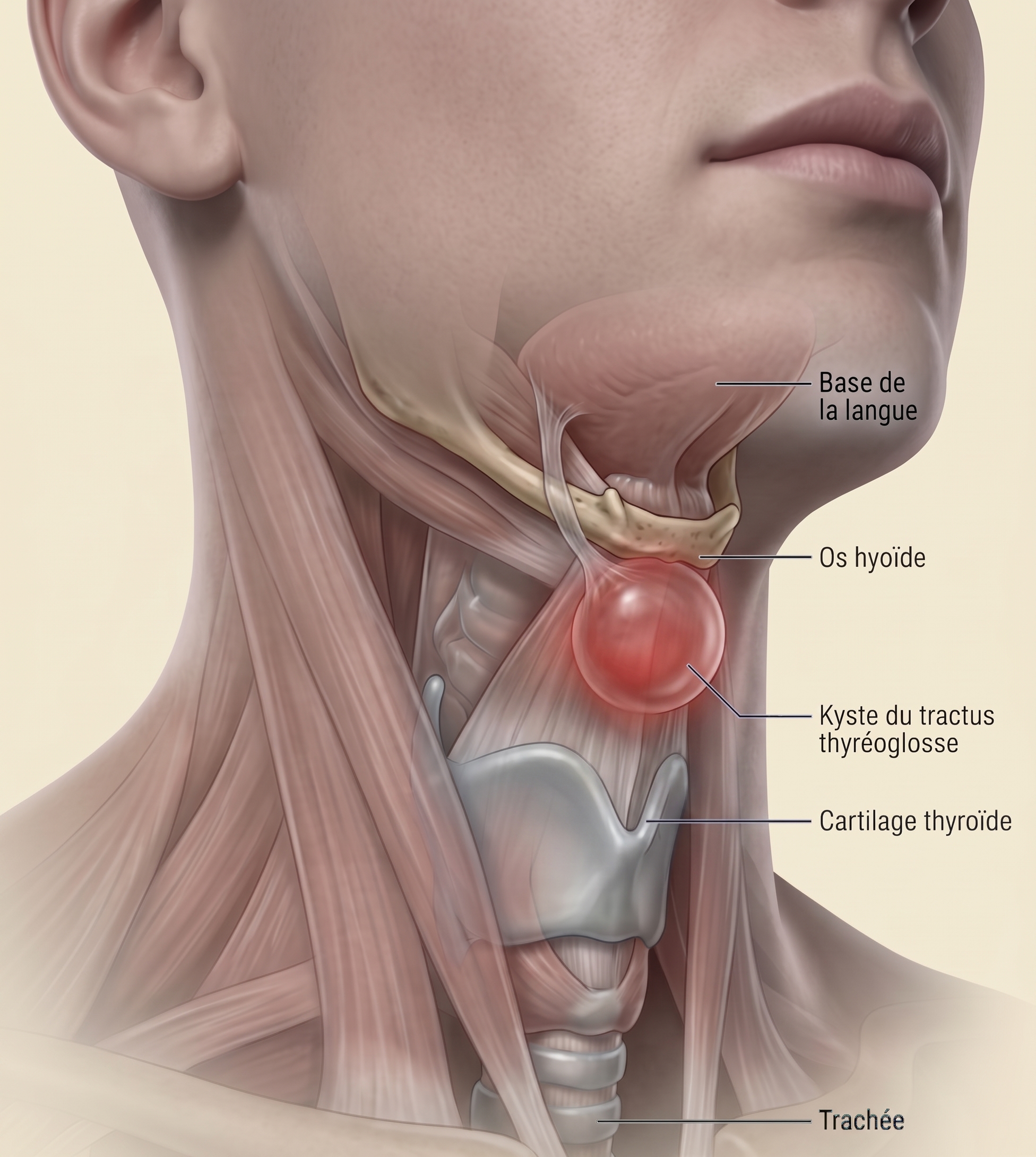
Thyroglossal duct cyst: a midline lump that moves on swallowing and sticking out the tongue, a remnant of the path the thyroid takes during embryonic development.
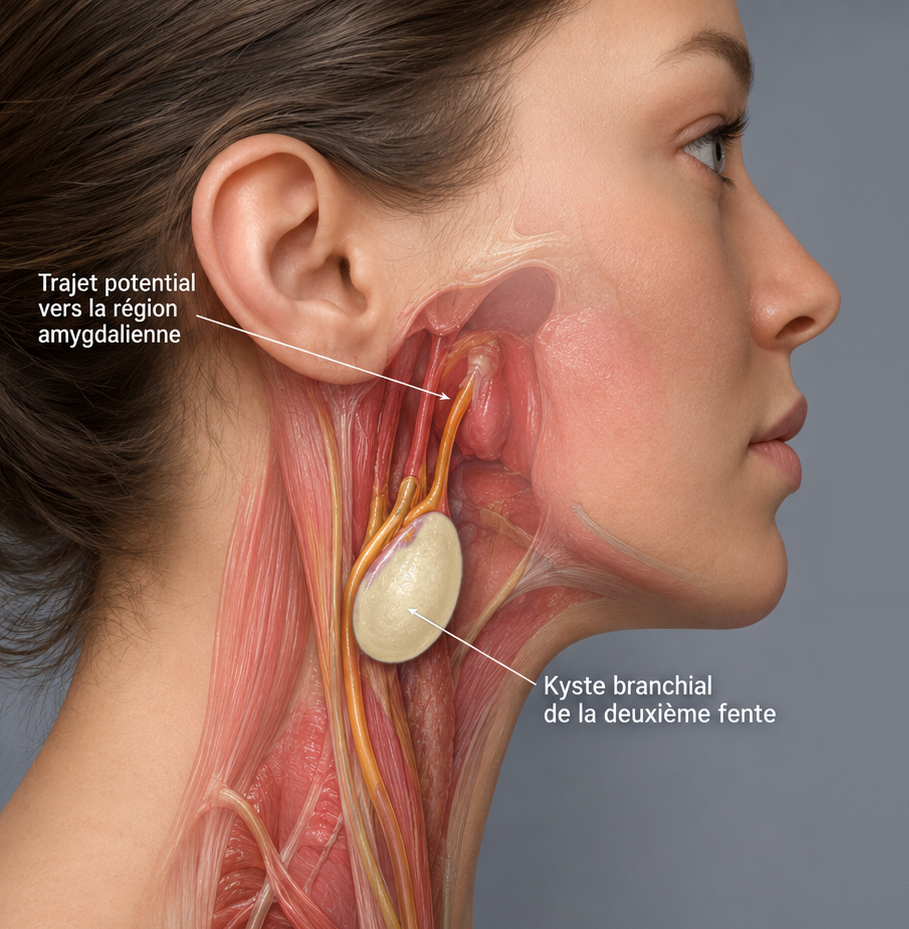
Branchial (lateral neck) cyst: a swelling along the sternocleidomastoid muscle, often revealed by an episode of inflammation or infection in adulthood.
Epidermoid and sebaceous cysts: lesions under the skin caused by blocked hair follicles and sebaceous glands, common on the cheeks, around the ear or on the scalp.
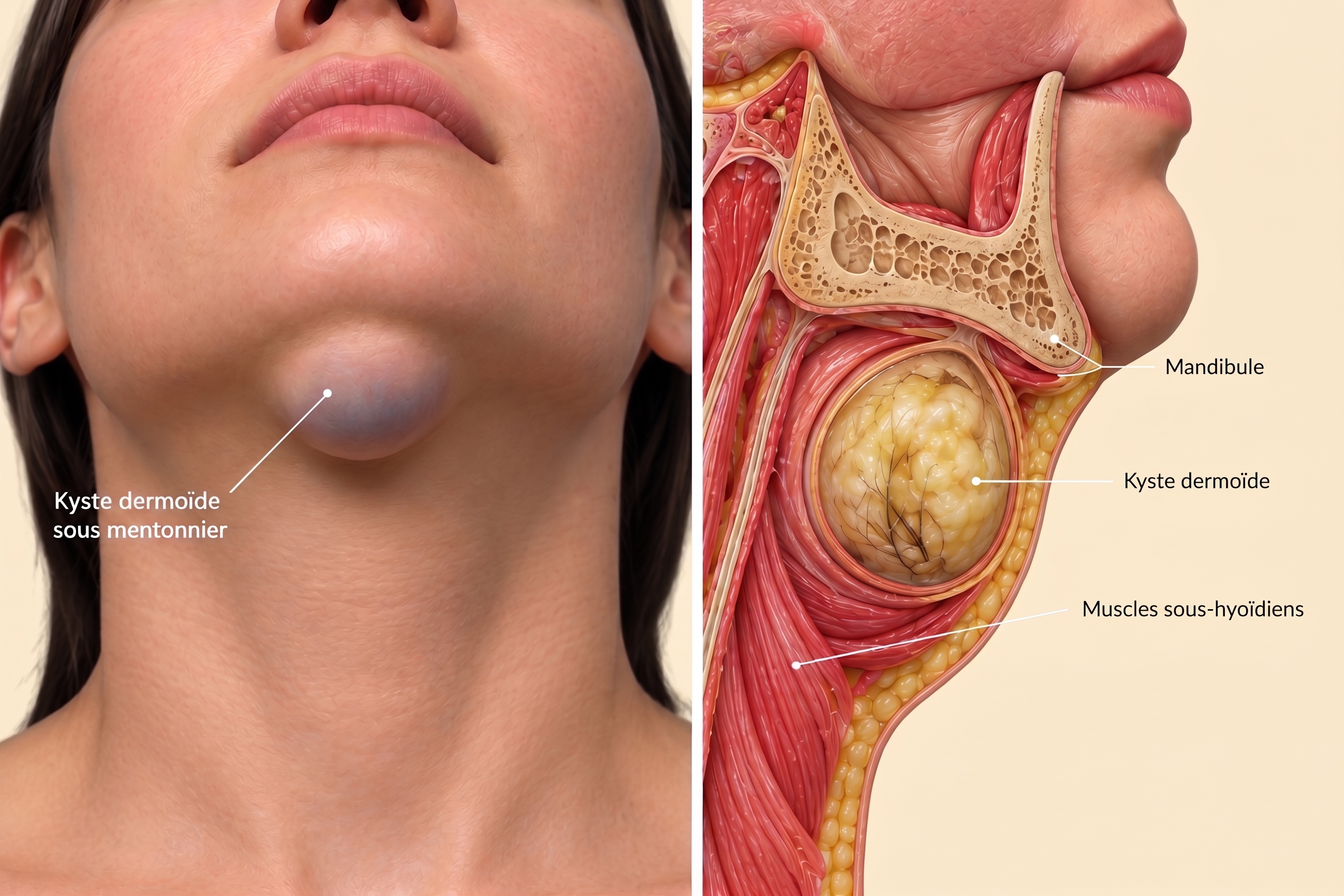
Dermoid cyst: congenital lumps under the skin, often at the tail of the eyebrow or in the midline.
Salivary gland cysts: ranula (floor of the mouth) or parotid cysts, requiring fine dissection of the facial nerve.
Why entrust your surgery to Dr Yousefpour?
The head and neck contain dense vascular networks and major motor nerve branches, notably those of the facial nerve and the hypoglossal nerve.
In-depth anatomical expertise: advanced command of the deep spaces of the head and neck to prevent nerve injury.
Minimally invasive, plastic surgery approach: incisions hidden in natural skin creases, below the edge of the jaw or along the skin tension lines (Langer’s lines).
Systematic pathology: every specimen is sent to a specialised laboratory to confirm the benign nature of the lesion.
Frequently asked questions
Is the operation covered by health insurance? Yes. Removal of a head or neck cyst rests on a strict medical indication (preventing infection, compression, pathological analysis). You receive a certificate of care and the procedure is reimbursed according to the Belgian fee schedule and the cover of your supplementary or hospital insurance.
How is pain managed? Recovery is usually only mildly painful, more a feeling of tightness or local discomfort. A suitable pain-relief protocol (simple painkillers and anti-inflammatories according to your medical profile) keeps it under control from the first 24 hours.
When can I return to activities and work? Under local anaesthesia, desk work or light activity can usually resume within 24 to 48 hours. For a large or deep lesion, or under general anaesthesia, 3 to 7 days off work may be advised. Strenuous sports are suspended for 2 to 3 weeks.
Will the scar be visible? Dr Yousefpour applies the principles of head and neck plastic surgery: incisions hidden in natural creases, fine intradermal sutures and personalised advice on sun protection and scar massage for optimal aesthetic blending over the months.
Purpose of the procedure
The operation aims to remove the lesion completely in order to prevent:
Recurrence or gradual enlargement.
Acute infections, abscesses or skin fistulas.
Compression of adjacent tissues and structures.
Aesthetic or functional harm.
Every specimen is systematically analysed in the laboratory to confirm the benign nature of the lesion.
How the operation is performed
Anaesthesia: depending on the size, location and depth of the lesion, under local anaesthesia, conscious sedation or general anaesthesia (with a pre-anaesthetic consultation when needed).
Surgical technique: incision placed in the skin tension lines (Langer’s lines), the natural creases of the neck or the shaded areas of the face; complete removal of the cyst capsule to eliminate the risk of recurrence.
Closure: fine sutures and/or intradermal stitches suited to facial plastic and reconstructive surgery.
Expected benefits and alternatives
Benefits: disappearance of the swelling, prevention of infection, definitive diagnosis by microscopic analysis.
Alternatives: simple monitoring carries a risk of growth and acute infection that makes later surgery more complex; simple aspiration or partial drainage almost always leads to recurrence.
Possible risks and complications
Although head and neck surgical expertise minimises complications, every operation carries some risk:
Usual recovery: temporary swelling and bruising for a few days, discomfort or tightness at the operated area, minimal blood-stained discharge in the first 48 hours.
Haematoma or bleeding: may sometimes require drainage or early re-operation.
Local infection: treated with wound care and/or antibiotics.
Abnormal healing: a hypertrophic or keloid scar is possible depending on the skin’s own reaction.
Skin sensation changes: temporary or lasting numbness around the incision.
Motor nerve risk: depending on how close the cyst is to the branches of the facial nerve or other motor nerves of the neck, temporary (rarely permanent) muscle weakness.
Recurrence: exceptional after complete removal, but possible after infections that have disrupted the tissue planes.
Immediate post-operative recommendations
Rest and avoid strenuous physical effort for 7 to 14 days.
Keep the dressing clean and dry as instructed.
Avoid direct sun on the scar for several months (sunscreen SPF 50+).
Contact the practice immediately in case of fever, severe pain not relieved by the prescribed painkillers, sudden swelling or abnormal discharge.
Informed consent
You receive an informed consent form before the operation. By signing it, you confirm that Dr Yousefpour has clearly explained your condition, the procedure, the alternatives and the risks, that you have been able to ask all your questions and have had enough time to reflect, and you authorise removal of the cyst and any additional steps strictly necessary during the operation.